
 ไทย

Yaowarat, Bangkok Chinatown
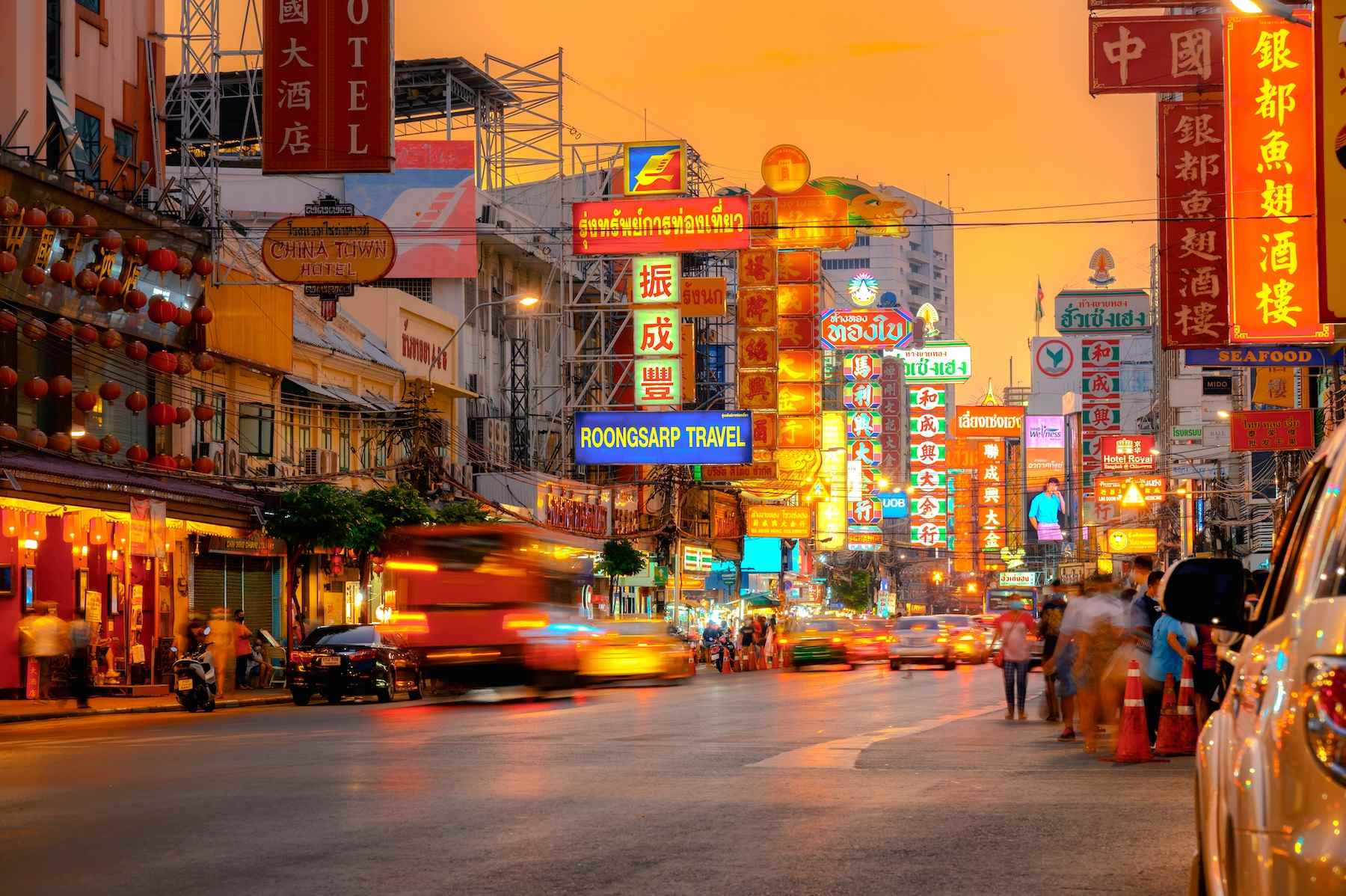
Yaowarat Road is the spine of Bangkok’s Chinatown, and after dark it becomes one of the best street food districts in Asia. By day it is a working neighbourhood of gold shops, herbalists and wholesale lanes. By night the pavements fill with charcoal grills, and the neon signs along the road make it one of the most photographed streets in the city. For guests at Mercure Bangkok Siam Ratchathewi, it is a straightforward evening out and a complete change of scene from Siam.
Getting to Yaowarat from the hotel
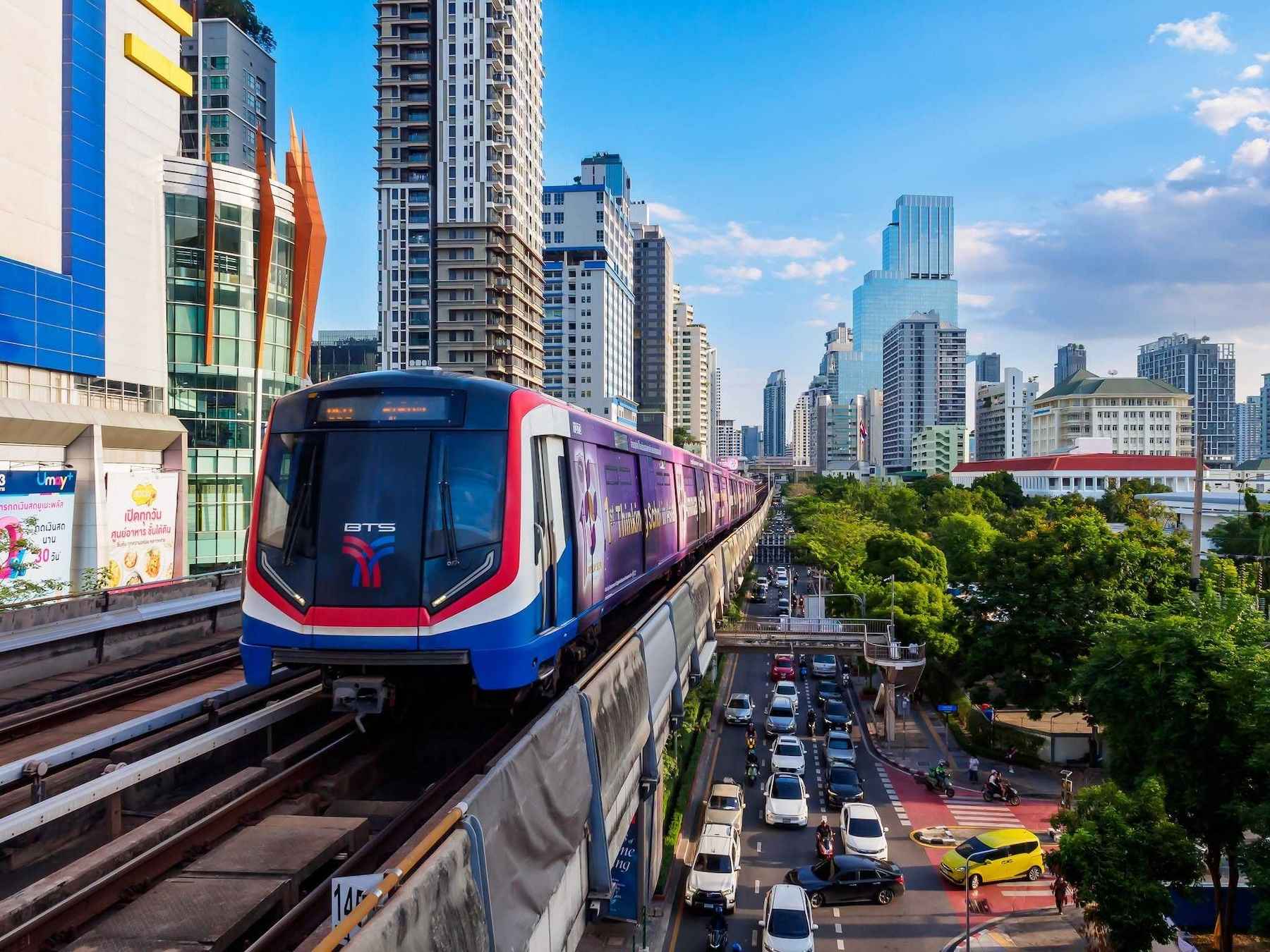
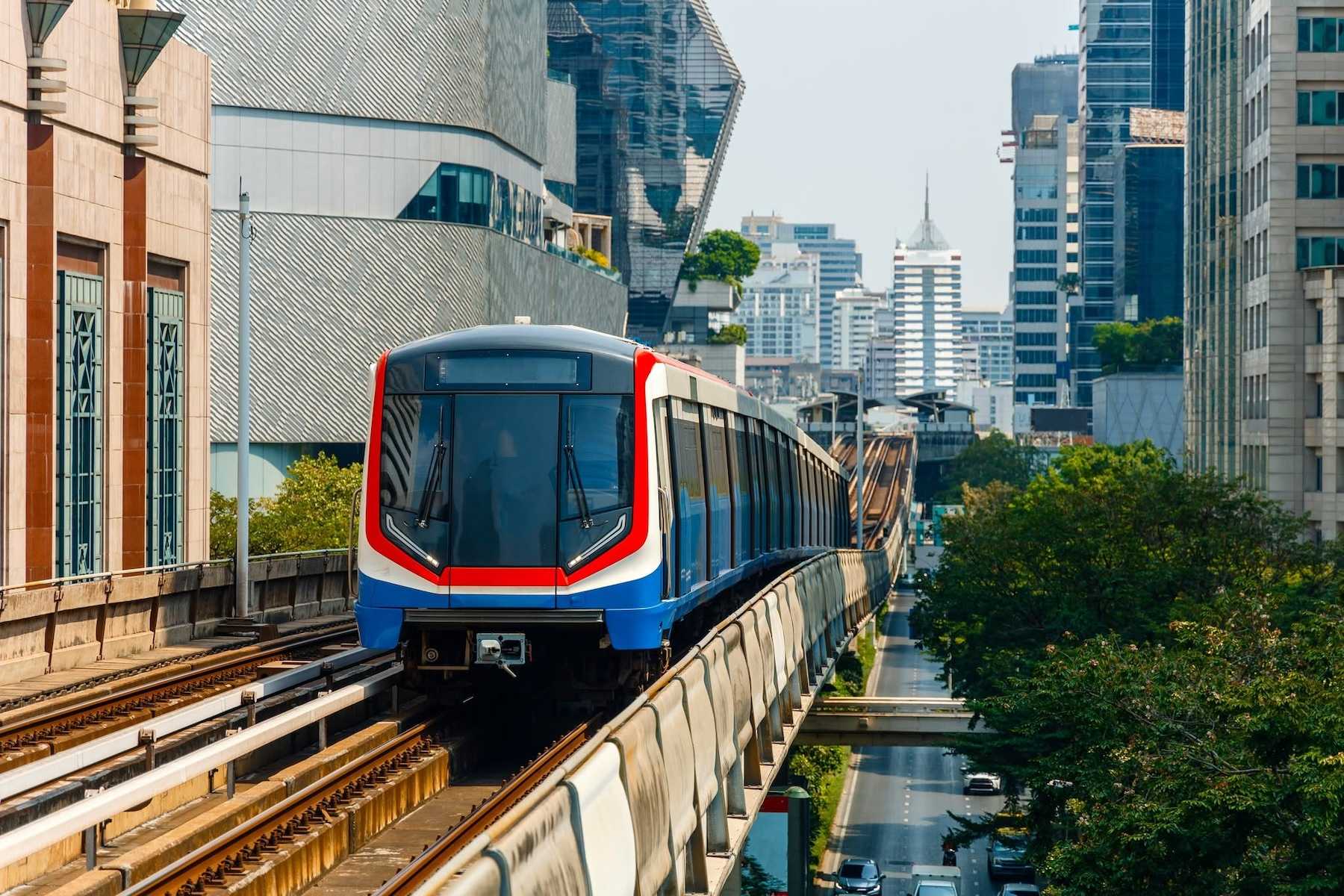
The cleanest route by rail is BTS from Ratchathewi to Siam, change to the Silom Line and continue to Sala Daeng, then transfer to the MRT at Si Lom and ride the Blue Line to Wat Mangkon, which exits directly into Chinatown. Allow around forty minutes door to door.
Outside peak hours a taxi is simpler and often quicker, at roughly twenty-five minutes. Going by road in the evening is slower but drops you at the heart of the food street rather than at its edge. Our article on travelling by rail covers the wider network for guests at a hotel near the BTS Skytrain.
What Yaowarat is known for
Three things, mostly. Gold, food and temples. The gold shops along Yaowarat Road are a genuine trade rather than a tourist display, their windows stacked with chains sold by weight at prices posted daily. The street food is the main draw for most visitors. And Wat Traimit at the eastern end houses the Golden Buddha, a five-and-a-half tonne solid gold figure hidden under plaster for centuries.
Eating in Chinatown
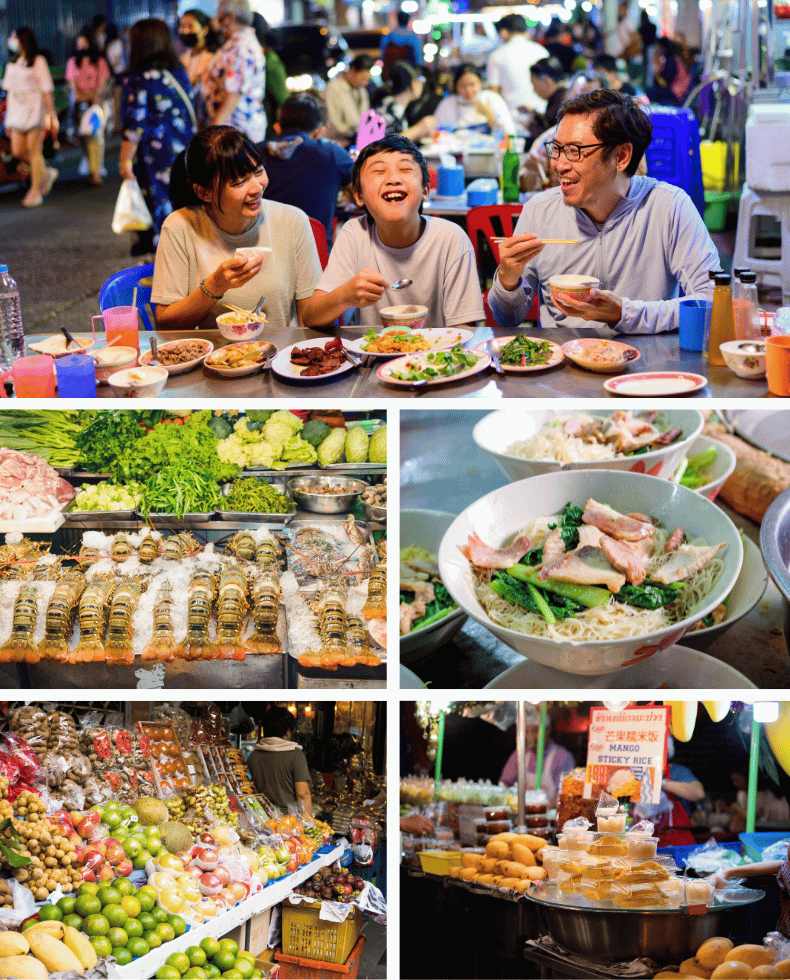
The food is the reason to come, and it runs from pavement stools to long-established shophouse restaurants. Grilled seafood, oyster omelettes, kuay jab noodle soup, braised goose, bird’s nest and herbal drinks all have their specialists, many of them running for generations at the same spot.
Stalls set up from late afternoon and run until the small hours. The busiest stretch is between Ratchawong Road and Wat Traimit. Queues are a reliable indicator of quality, and most places are cash only.
Sampeng Lane and the market alleys
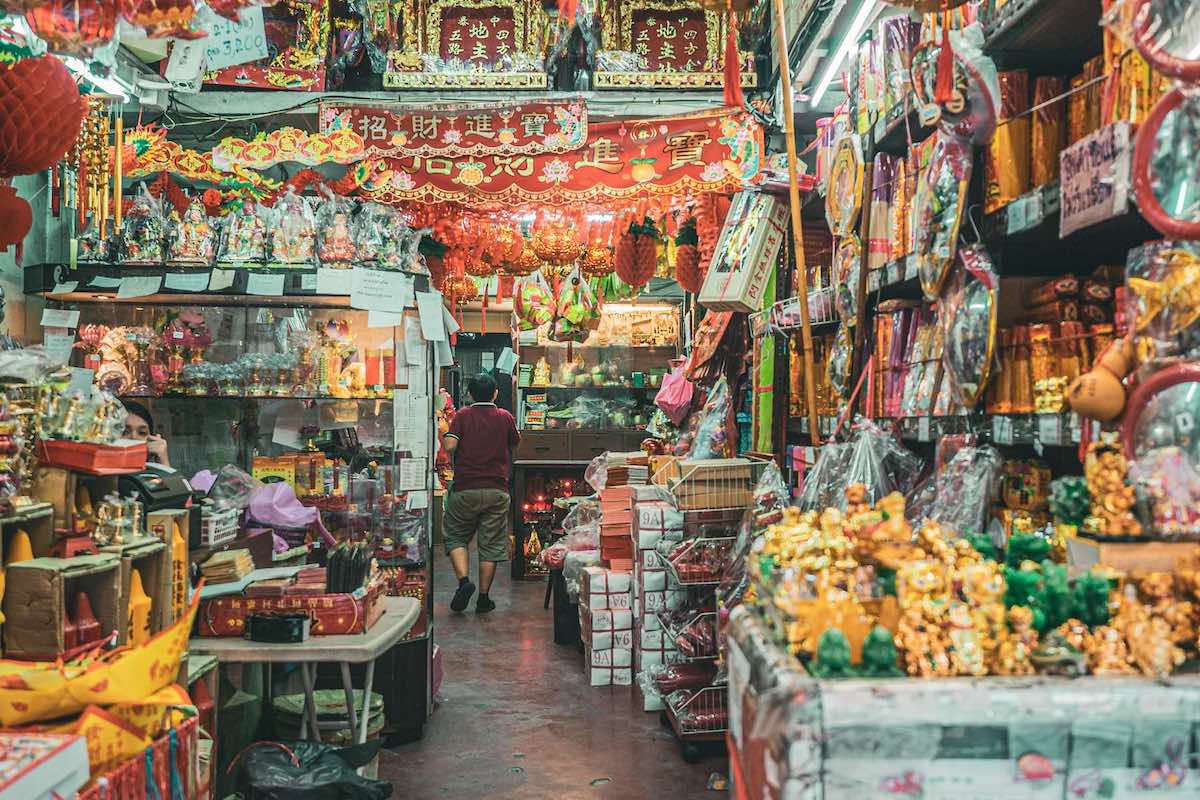
Running parallel to Yaowarat, Sampeng Lane is a narrow wholesale market selling fabric, accessories, stationery and toys by the dozen. It is tight, loud and busy with trolleys, and it operates mostly in daylight hours, which makes it a good morning counterpart to the evening food.
The side sois towards the river lead into Talat Noi, an old Chinese-Portuguese quarter of workshops, street art and small cafes that has become a favourite for photographers.
Wat Traimit and the Golden Buddha
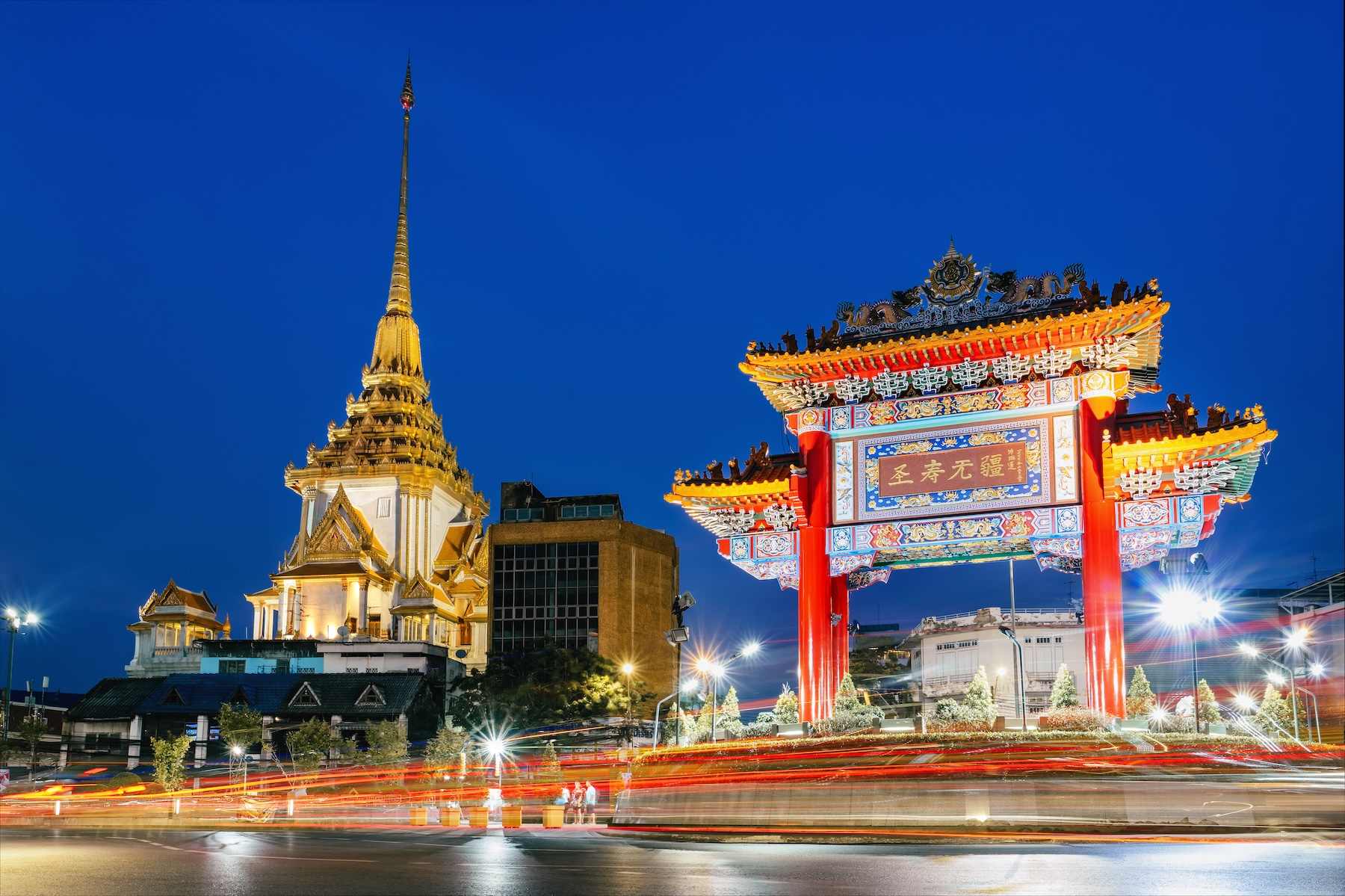
At the Odeon Circle end, Wat Traimit holds the largest solid gold Buddha image in the world. The statue spent centuries covered in stucco to hide it from invaders and was only revealed in the 1950s when it was dropped during a move. The temple also houses a small museum on the history of Chinese settlement in Bangkok.
Visit in the morning before the heat and before the food crowds arrive.
When to go
Evenings from around six are when Yaowarat is at its most alive. Weekends are busier than weekdays and Sunday evening is the peak. If you prefer the gold shops and markets, come between ten and four instead.
Chinese New Year transforms the district entirely, with the road closed to traffic, lion dances and enormous crowds. It is spectacular but not the time for a relaxed dinner.
Practical notes
Bring cash, as most stalls do not take cards. Wear shoes you do not mind getting splashed, since pavements near the seafood grills stay wet. The street is narrow and traffic continues through the crowds, so stay alert when crossing.
Portions are small by design, which is the point. Eat at four or five places rather than sitting down to one large meal.
Combining Yaowarat with the rest of your day
Chinatown works well as an evening after a day spent elsewhere. The river piers are close, so an afternoon at Wat Pho or the Grand Palace followed by dinner in Yaowarat makes a natural pairing. Guests based in the Siam area can read more about the district in our article on choosing a hotel in Ratchathewi, or see the full neighbourhood in our things to do guide.
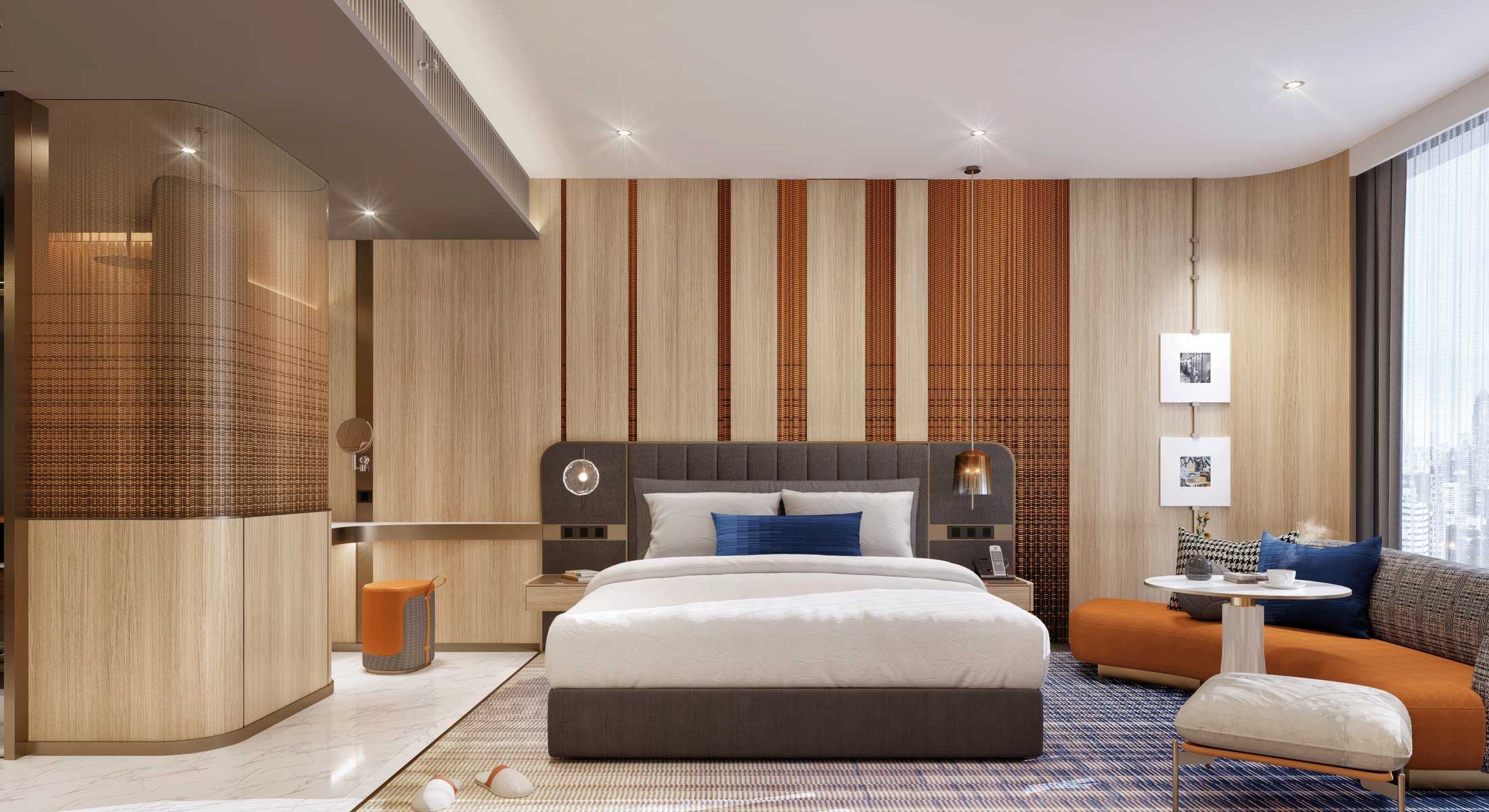
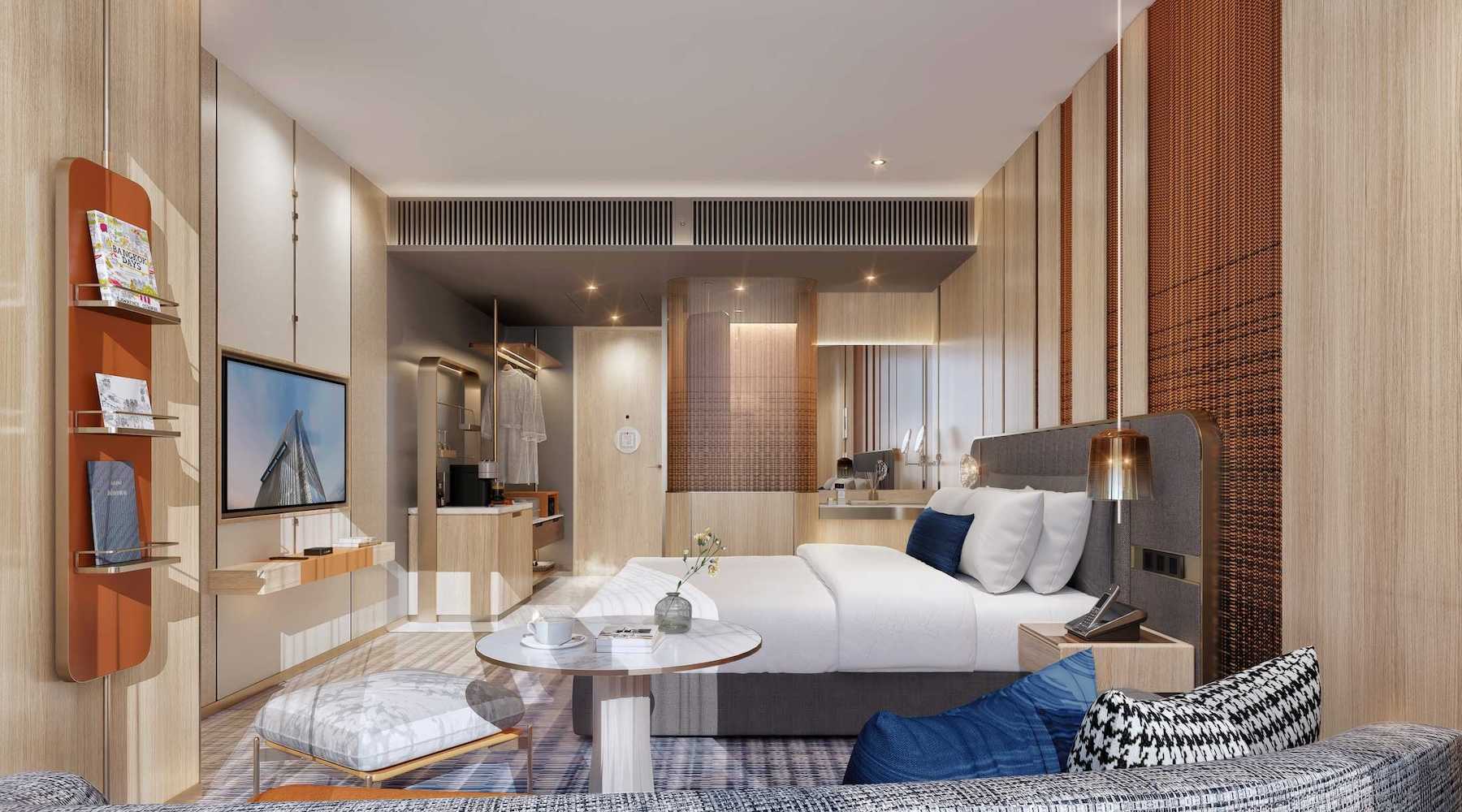
Rooms for guests planning late nights out are set out on our accommodation page.
Talat Noi and the riverside edge
South of Yaowarat Road the lanes narrow towards the river into Talat Noi, one of the oldest continuously settled quarters in Bangkok. Car part workshops sit beside Portuguese-era shrines, and the walls carry some of the city’s better street art. It is quiet in a way Chinatown never is, and the walk takes about fifteen minutes from the main food street. From there the Marine Department pier connects to the Chao Phraya boats, which makes it possible to arrive by river rather than by road.
FAQs about Yaowarat, Bangkok Chinatown
Q: How do I get to Yaowarat from Ratchathewi?
A: By rail, take the BTS to Siam, change to the Silom Line for Sala Daeng, then the MRT from Si Lom to Wat Mangkon. Allow about forty minutes. A taxi takes roughly twenty-five minutes outside peak hours.
Q: What time does the Yaowarat street food start?
A: Stalls begin setting up in the late afternoon and the street is at its busiest from around six in the evening until late.
Q: Which MRT station is Chinatown?
A: Wat Mangkon on the Blue Line exits directly into the district. Hua Lamphong is the alternative at the eastern end.
Q: Is Yaowarat worth visiting during the day?
A: Yes, for different reasons. Gold shops, Sampeng Lane market and Wat Traimit are all daytime activities, while the food is an evening affair.
Q: Do I need cash in Chinatown?
A: Yes. Most street stalls and many smaller restaurants are cash only, so bring enough for the evening.

